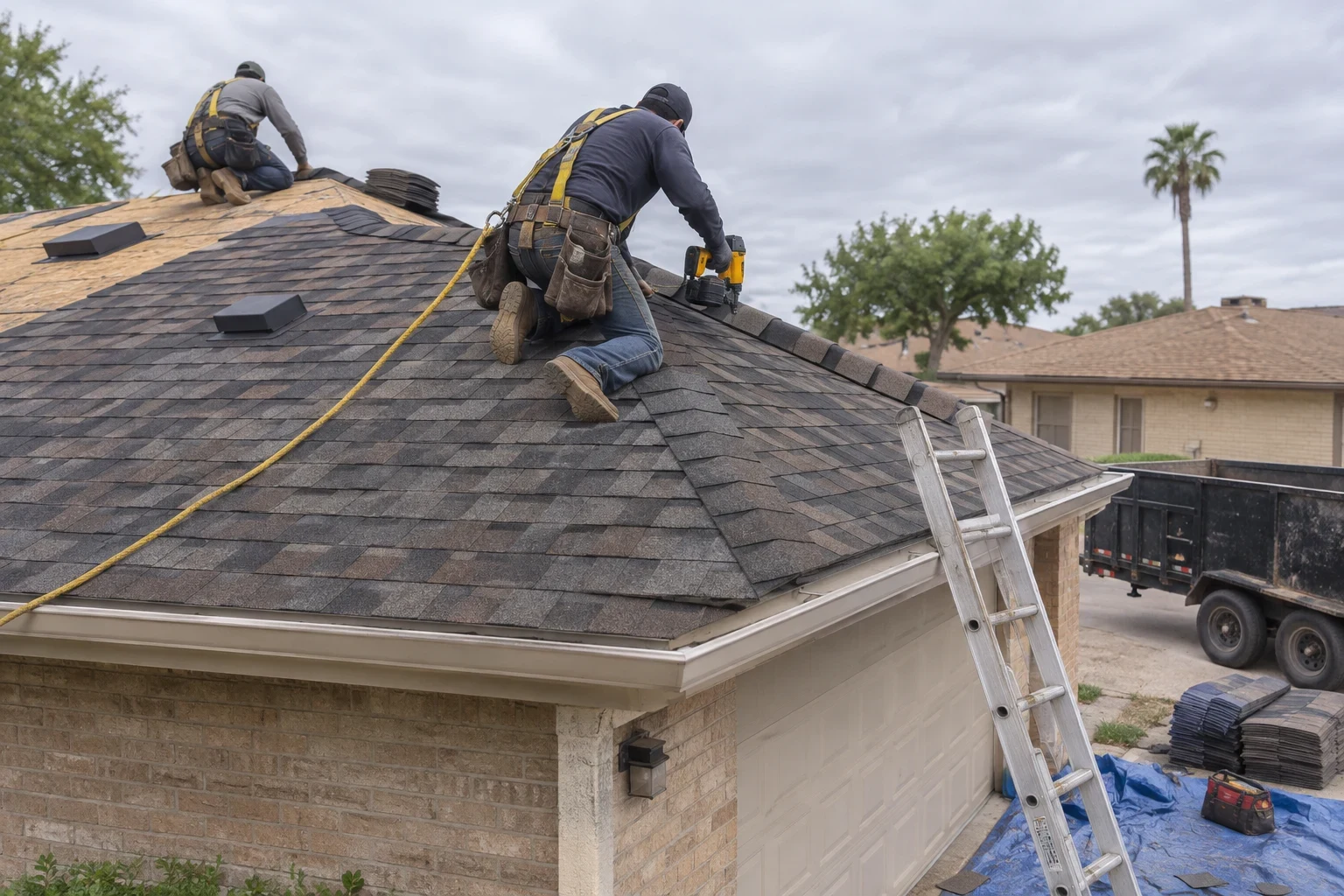
Tempe Roofing Matched to the Way Desert Roofs Age
We repair, replace and install tile, shingle, foam and flat roofs on homes across Tempe, Mesa and Chandler. You get a clear account of what your roof needs, a written estimate with each line explained, and a crew that protects your yard and leaves the site clean each evening.
- Written line-item estimates
- Permits pulled when required
- Yard protected, swept daily
- Tile, foam and shingle
Roofing Services for Your Home
We work on the roof types you actually see on homes here: concrete and clay tile, asphalt shingle, spray foam and low-slope flat roofs. Some jobs are a single cracked tile or a worn foam coating; others call for roof replacement or new roof installation from the deck up. Each service page explains how that roof fails, how we fix it and what moves the price. If you are not sure which applies to your home, start with roof repair and we will tell you plainly whether a fix will hold.
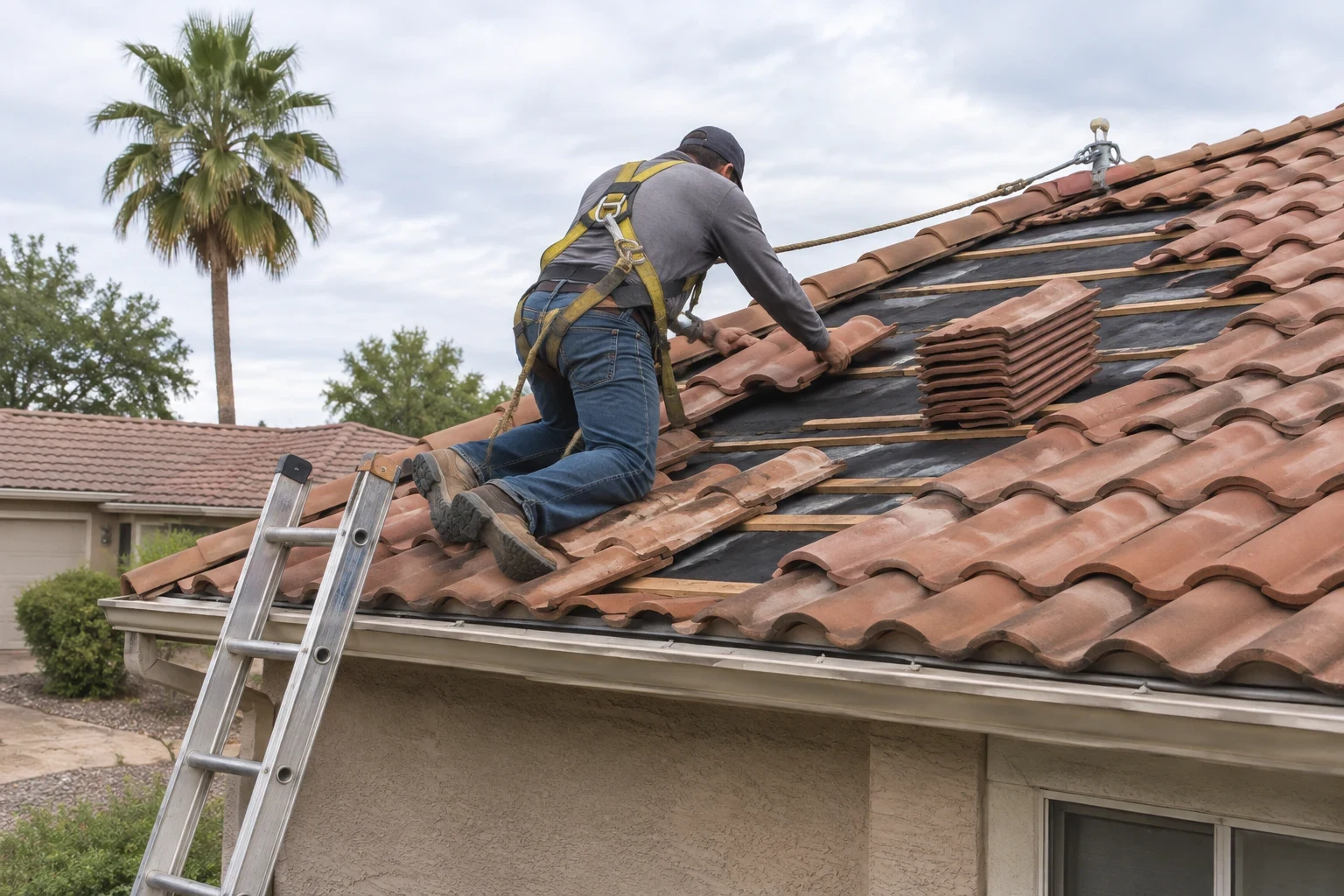
Tile Roofing
Underlayment replacement, tile relay and broken tile repair for concrete and clay roofs, with photos and a line-item quote before any work starts.
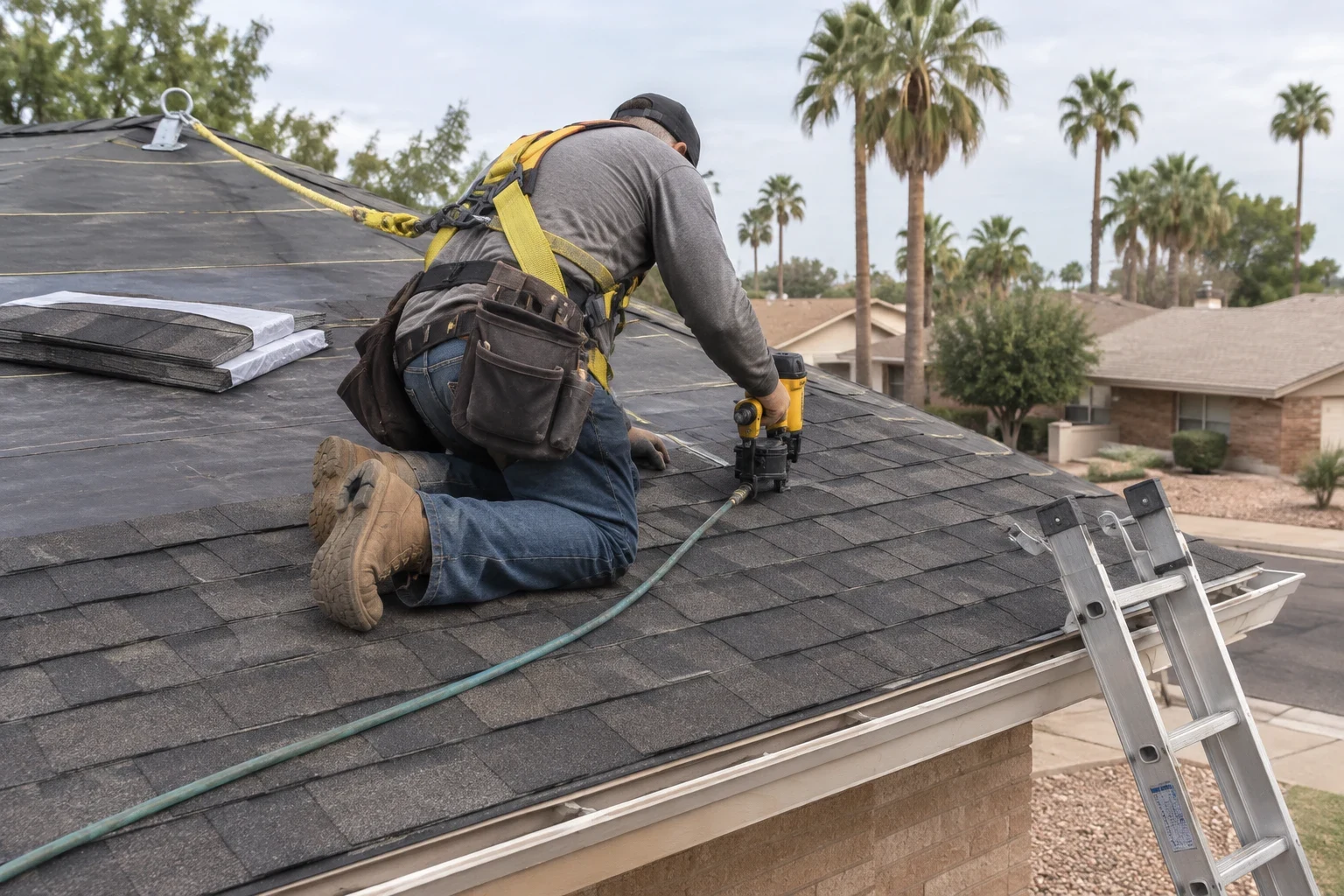
Shingle Roofing
Asphalt shingle roofs chosen and installed for desert sun, with new underlayment, proper venting and careful flashing at every wall and pipe.
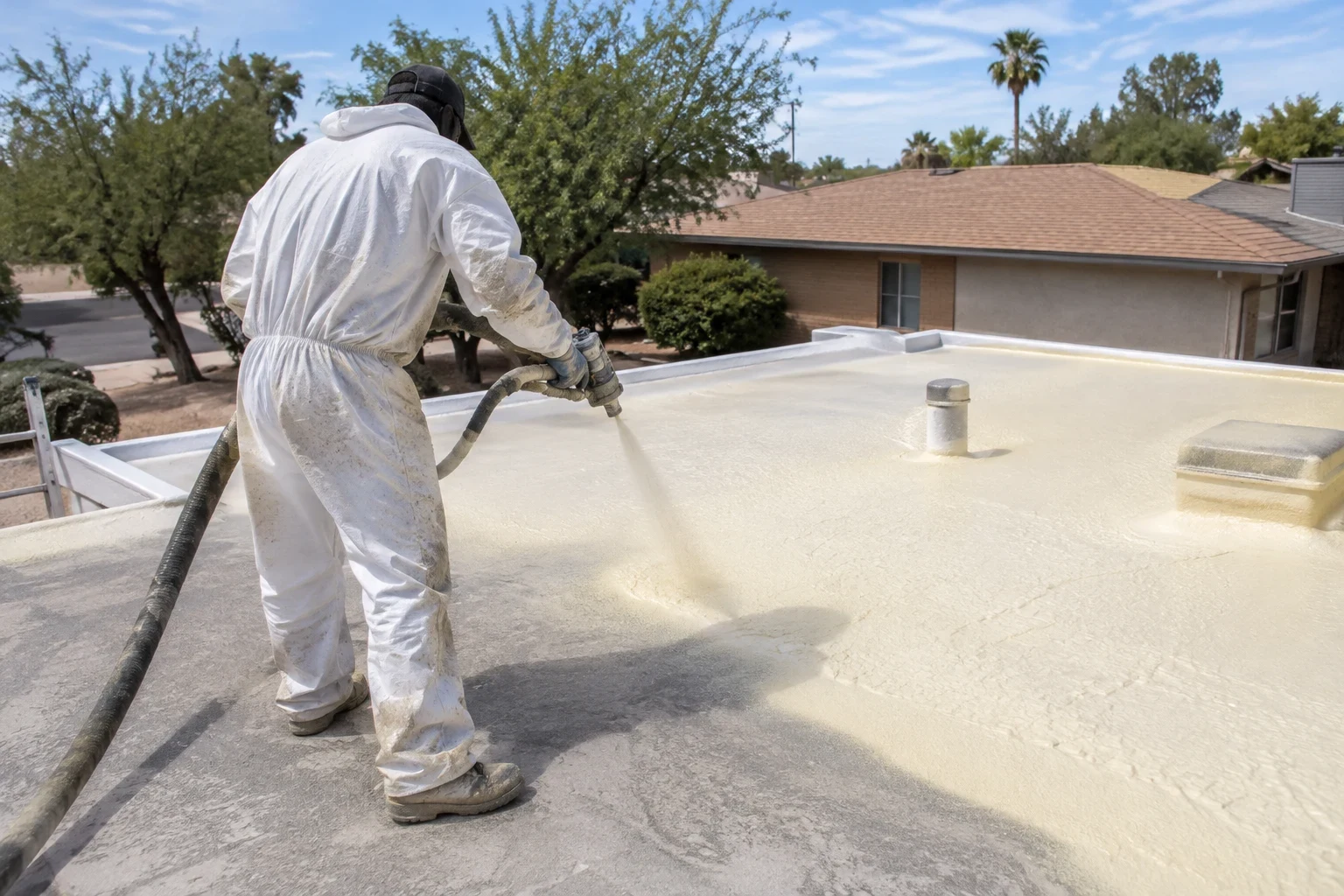
Foam Roofing
New spray foam roofs, recoats and repairs for low-slope and flat roofs, with the coating matched to how much sun your roof takes.
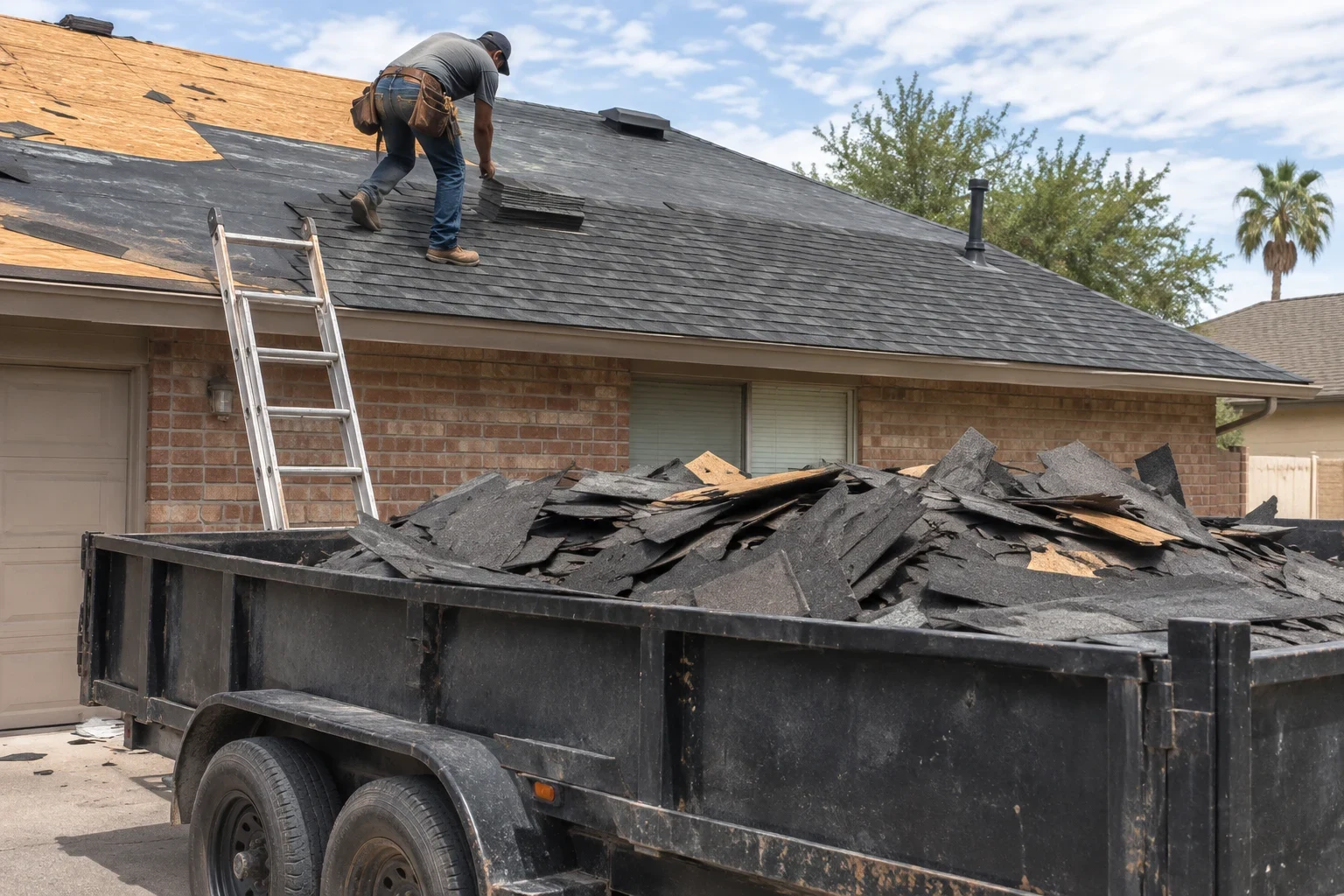
Roof Replacement
A full tear-off and rebuild for tile, shingle, foam and flat roofs, with the decking checked and the permit handled before the new roof goes on.
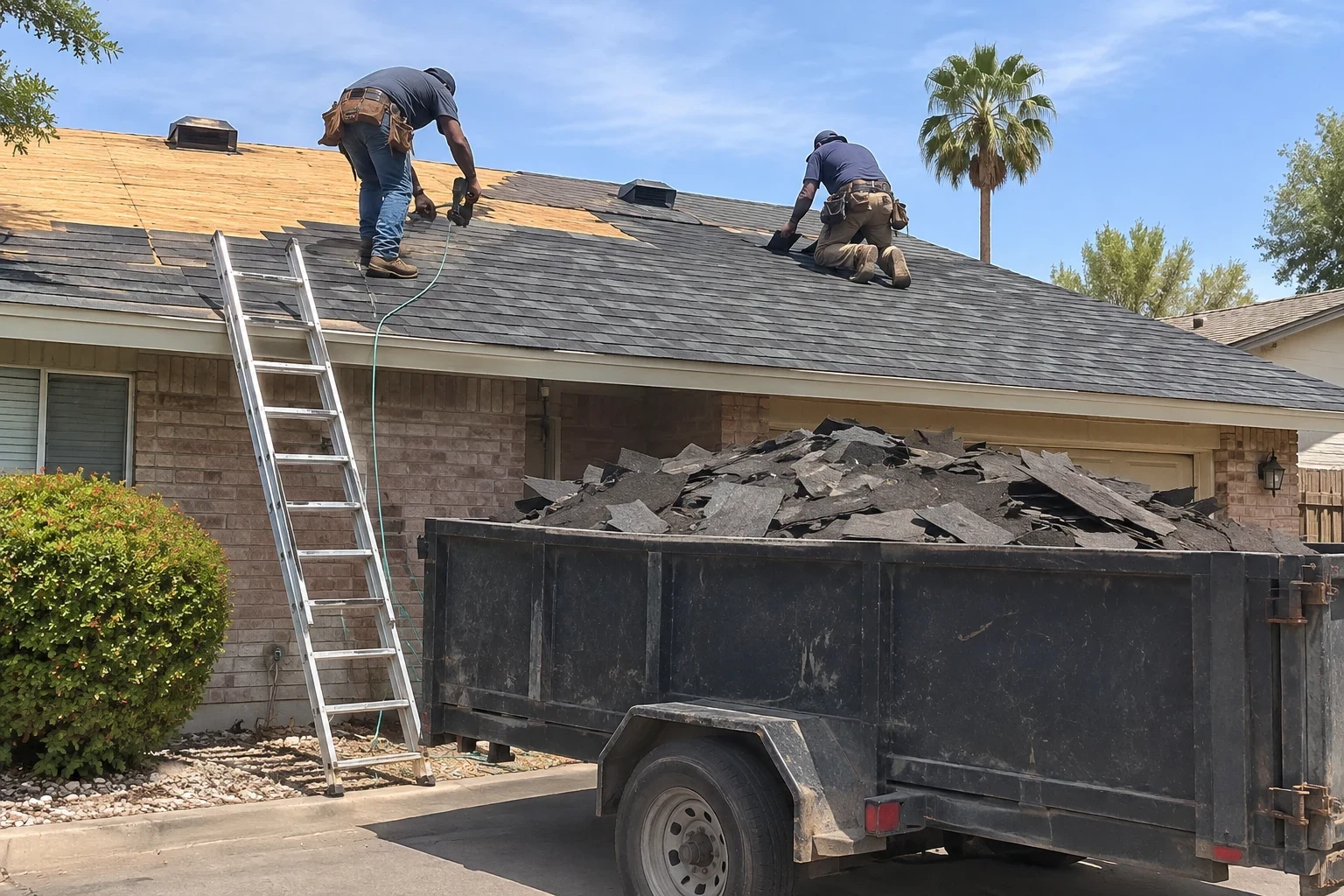
Roof Repair
Targeted repairs for leaks, cracked tile, worn flashing and tired foam, with photos of what we found and a clear answer on whether a repair will hold.
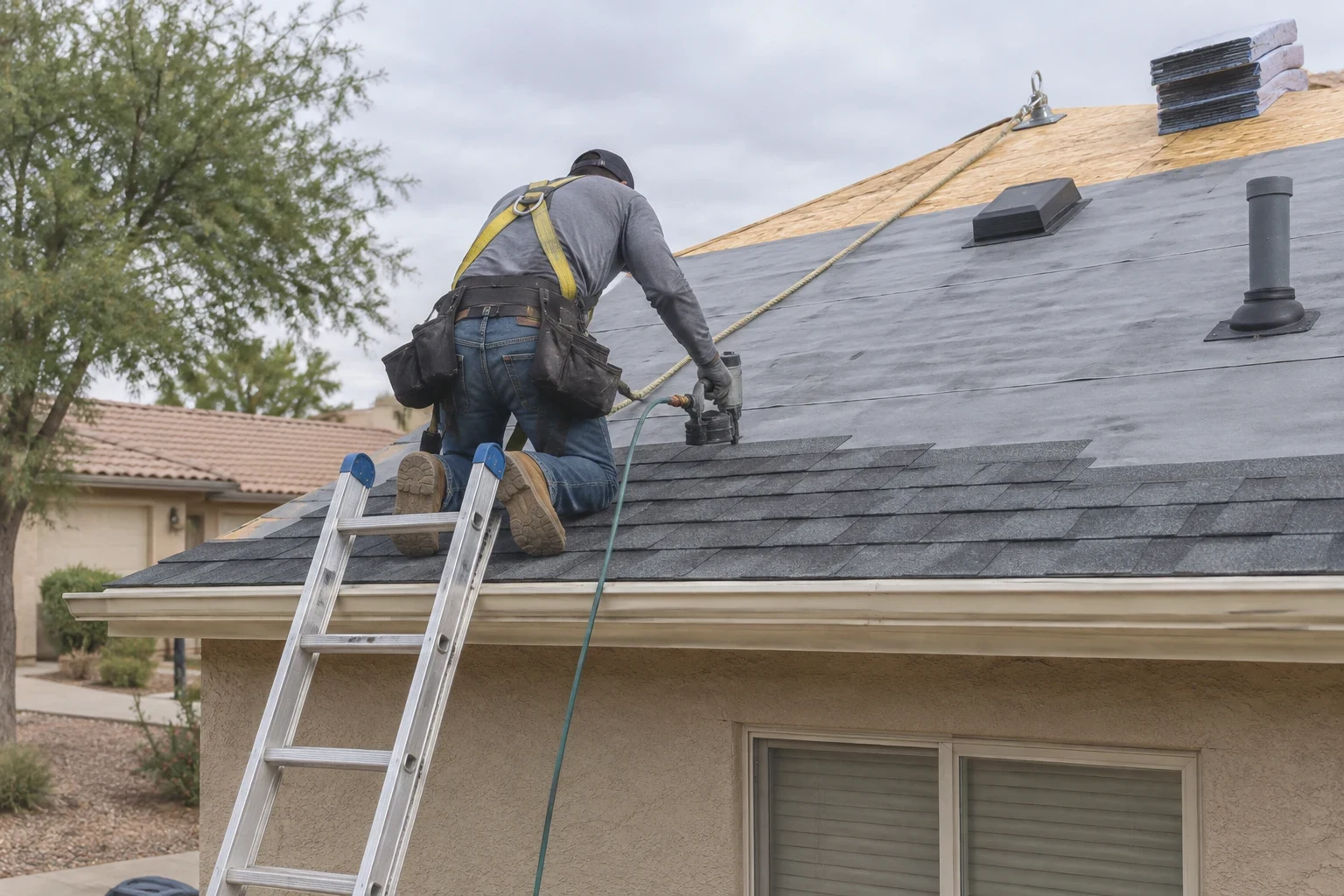
New Roof Installation
Roofs for new homes, additions and casitas, with the material, underlayment and flashing chosen to suit the pitch and the desert sun.
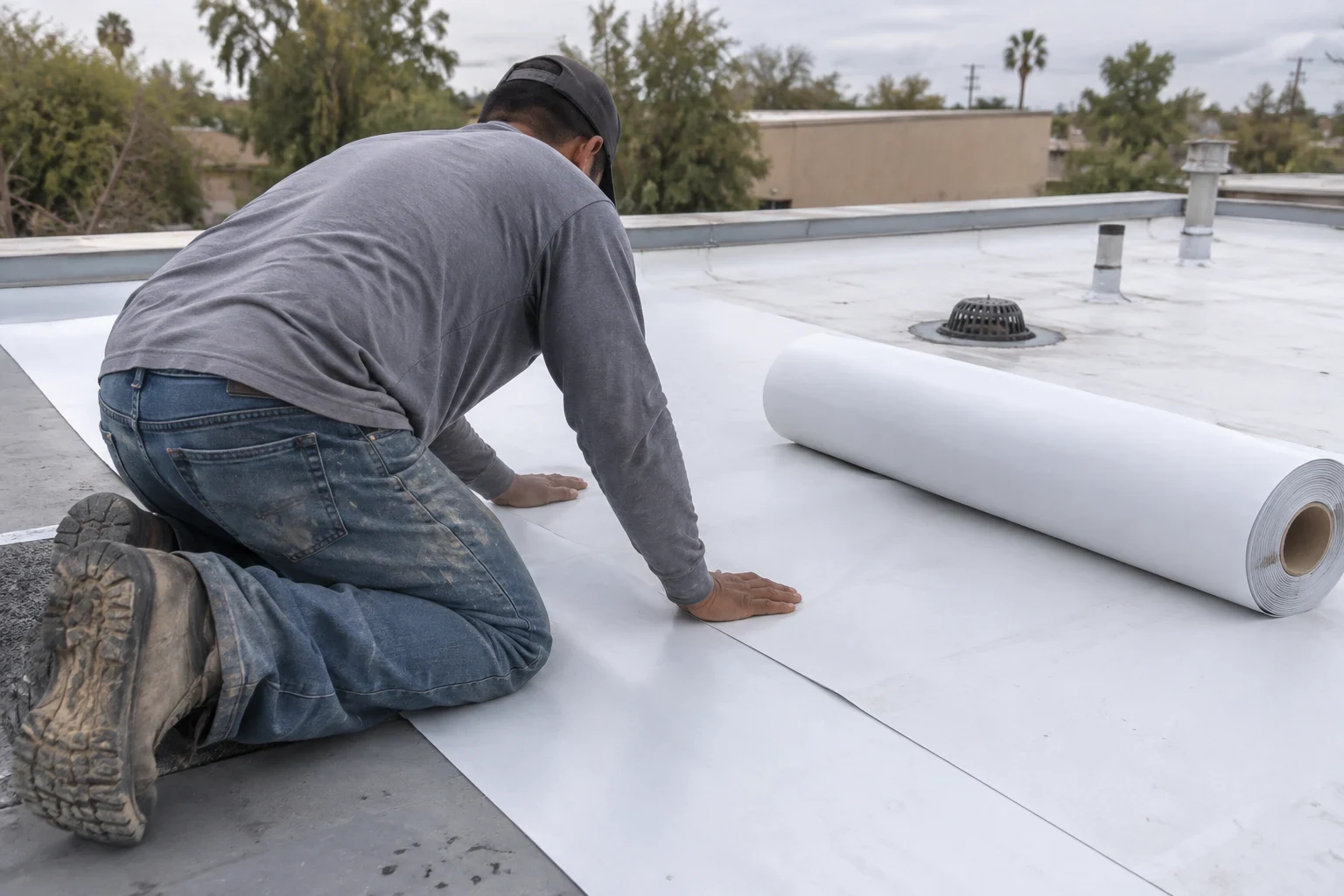
Flat Roofing
Repair, coating and replacement of flat and low-slope roofs, with careful work on the parapets, scuppers and seams where most leaks begin.
Where We Work
We serve homeowners throughout Tempe and nearby communities including Guadalupe, Mesa, Chandler and Gilbert. We also work on homes in Sun Lakes, Paradise Valley and Glendale. Across these towns you find the same mix of tile, shingle and foam roofs, and the same strong sun wearing on them.
- Tempe
- Guadalupe
- Chandler
- Mesa
- Gilbert
- Sun Lakes
- Paradise Valley
- Glendale
If your home is nearby and not listed, ask when we talk by phone. Our Service Areas page has more detail on each town.
How We Work on Your Roof
Good roofing here comes down to understanding how sun and heat break materials down, then building the details so they last. That is the knowledge we bring to every job.
We look beneath the surface
On a tile roof, the tile is rarely what fails first. The underlayment beneath it dries out and cracks long before the tile wears, so we lift tiles and check it before recommending anything.
An honest repair-or-replace answer
When a fix has real life left in it, that is what we recommend, and the estimate reflects it. When the underlayment, deck or foam is worn out, we show you photos of what we found and explain why a patch would only last a season.
Materials chosen for heat
We pick underlayments, coatings and fasteners that hold up under long stretches of triple-digit days. Foam roofs get a coating suited to strong UV, applied at the thickness the system needs.
Your property treated with care
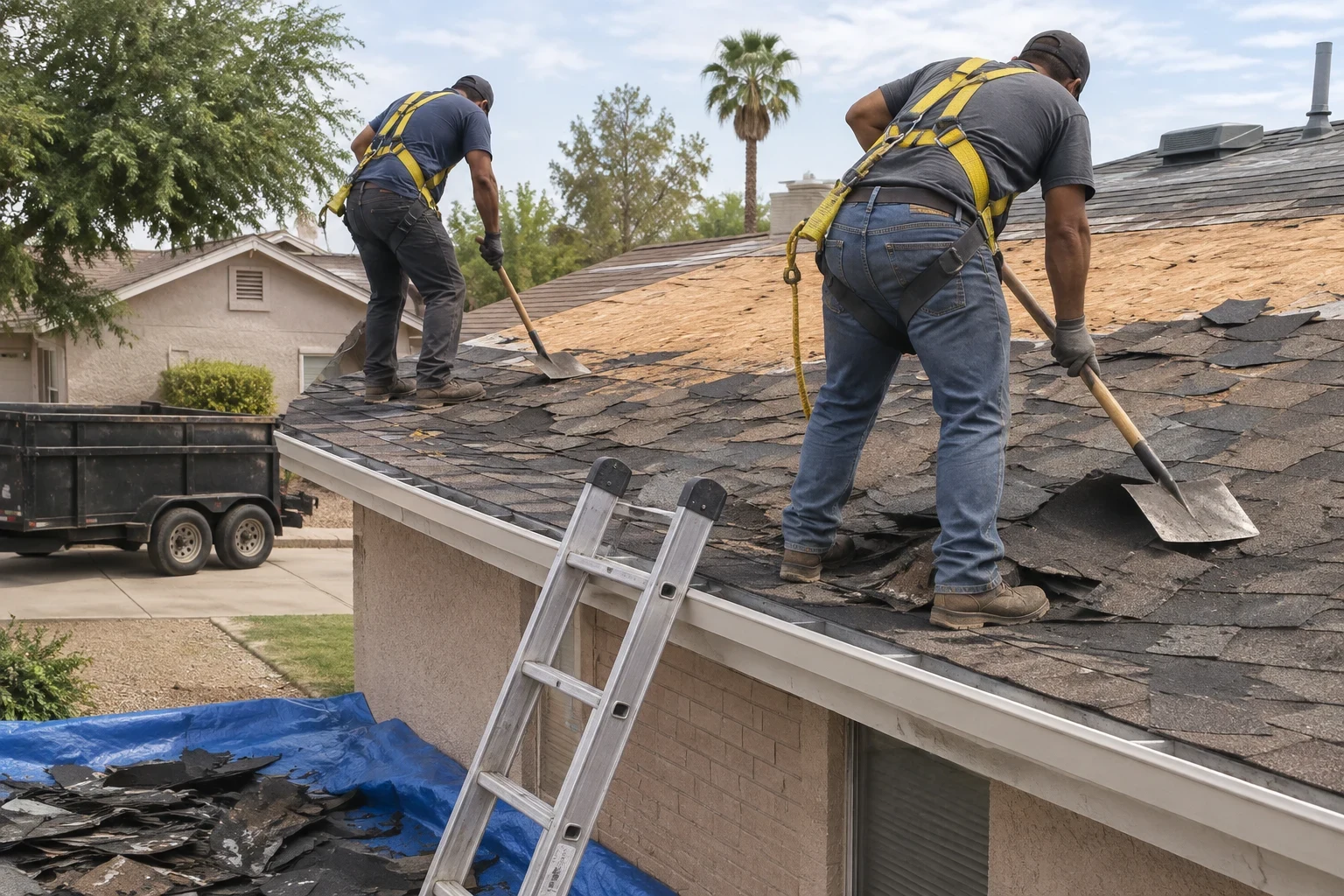
Before tear-off, plants, AC units and patio furniture are covered, and we keep the driveway open where we can. Gravel and desert landscaping get raked back into place before we pack up.
Permits handled for you
When a job calls for a city permit, we pull it, schedule the required sign-offs and build to the code your city has adopted. You do not have to sort out the paperwork.
How a Roofing Job Runs
Most jobs follow the same steps, so you know what is happening at your home and when.
- 1
Talk it through by phone
Tell us about your roof, its age and what you have noticed. We will ask a few questions and set a time to come out and measure.
- 2
Measure and assess
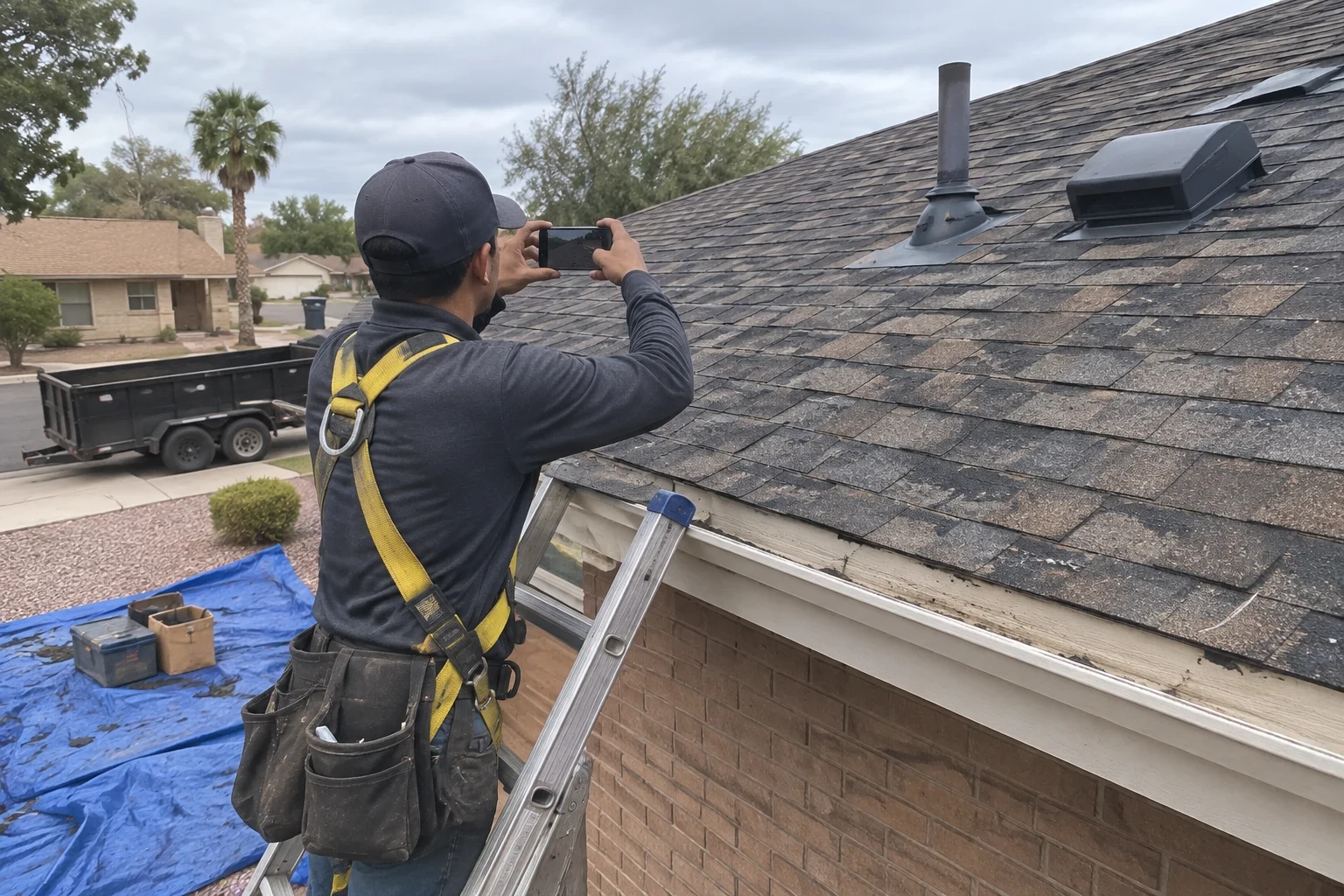
We get on the roof, measure it, look at the material and the details around penetrations, and photograph what matters so you can see it too.
- 3
Written estimate
You receive a line-item estimate with the scope, materials and any permit costs. We go over it with you and answer questions before you decide.
- 4
Prep, build and clean
We pull any permit, cover plants and equipment, then work in order: tear-off, deck repairs, underlayment, flashing and the finished surface. Before we leave each evening, the work area is swept and a magnet goes over the yard for stray nails.
- 5
Walk the finished roof together
When the work is complete and any required inspection has passed, we go over the finished roof with you and leave written notes on its care.
What Shapes the Cost of Your Roof
No two roofs price the same, even on matching houses. The cost depends on the size and shape of the roof, the material you choose and what we find once the old layers come off. Here is what makes the biggest difference.
We measure your roof, check what is under the surface where we can, and give you a written estimate with each line described. If something unexpected turns up during the job, we show you before any added work begins.
- Roof size and pitch
- Square footage sets the base. Steeper slopes take more time and safety setup, and roofs with many hips, valleys and changes in height take longer to flash correctly.
- Material choice
- Concrete tile, clay tile, architectural shingle and spray foam each carry different material and labor costs. On many tile jobs, existing tile in good shape can be reset over new underlayment, which changes the numbers considerably.
- Condition of the deck
- Plywood or plank decking that has soaked up years of small leaks may need sections replaced. We cannot always see this until tear-off, so we explain up front how any deck work is priced.
- Layers and tear-off
- Removing one layer is simpler than removing several, and older flat roofs sometimes have built-up layers or foam over gravel that take extra labor to strip and haul away.
- Penetrations and equipment
- Rooftop AC units, evaporative coolers, skylights and vent stacks all need careful flashing. More penetrations mean more detail work, and moving a unit to roof beneath it adds a step.
- Permits and timing
- Permit fees and the required sign-offs are part of a full replacement. Scheduling work outside the hottest weeks can also make the job easier on crew and materials.
About Tempe Roofing
We are a residential roofing company working on homes in Tempe and the surrounding area. Our work covers the roof types common here, from the low-slope foam and built-up roofs on older ranch homes to the concrete tile on stucco houses built in later decades.
We keep our approach simple. We look carefully, explain what we see in plain words, write the estimate so every line makes sense, and finish the job with the same care we start it. Good roofing shows in the quiet details: a flashing lapped correctly, a tile set straight, a yard left clean.
Questions Homeowners Ask Us
My tile roof is about 20 years old and the tiles look fine. Does it need work?
Possibly. Concrete tile can last a very long time, but the underlayment beneath it often wears out sooner in strong sun and heat. Once it cracks, water that slips past the tiles reaches the deck. We can lift a few tiles, check the underlayment and tell you whether you need repairs, a tile reset over new underlayment or nothing yet.
Can my roof be patched, or is it time to start over?
That comes down to how far the wear has spread. A handful of broken tiles, one lifted shingle or a single bad flashing are usually fixed in place. If the underlayment has gone brittle over most of the roof, the deck feels soft underfoot or a foam roof has worn down to bare foam, a new roof tends to be the wiser use of your money. Either way, we show you photos and walk you through why we landed where we did.
How often does a foam roof need attention?
Spray foam is protected by a coating, and the sun slowly wears that coating thin. When it is recoated on time, the foam underneath stays sound for many years. If the coating is left too long, UV starts breaking down the foam and repairs get larger. We check coating thickness and condition and tell you where your roof stands.
Do I need a permit for a new roof?
A full roof replacement or new roof installation generally requires a city permit, while small repairs often do not. When your job needs one, we pull it, schedule the required sign-offs and build to the code your city has adopted. The permit cost appears on your written estimate.
How long will the work take, and do I need to be home?
Most repairs wrap up within a single visit. Replacing the whole roof on an average-size house tends to run a few working days, and tile or deck repairs can stretch that. You are free to go about your day while we work. We do like a few minutes with you when we arrive and again once the roof is finished.
Is there a good time of year to schedule roof work?
Spring and fall are comfortable for both the crew and the materials. Many homeowners like to have known problems handled before the summer monsoon storms arrive, so small weaknesses are dealt with before heavy rain tests them. We work year-round and plan hot-weather days around early starts.
Can you match my existing tile for a repair?
Often, yes. Many concrete and clay profiles are still made, and we look for the closest shape and color. Tile that has sat in the sun for years fades, so a new piece may read a shade brighter at first. Where it matters, we can move original tiles to the visible slopes and set the replacements where they show less.
Does your work come with a warranty?
Yes. Our work carries a 10-year labor warranty. We are glad to go over what it covers when we talk by phone, so you know where you stand before the job begins.
Ready to Talk About Your Roof
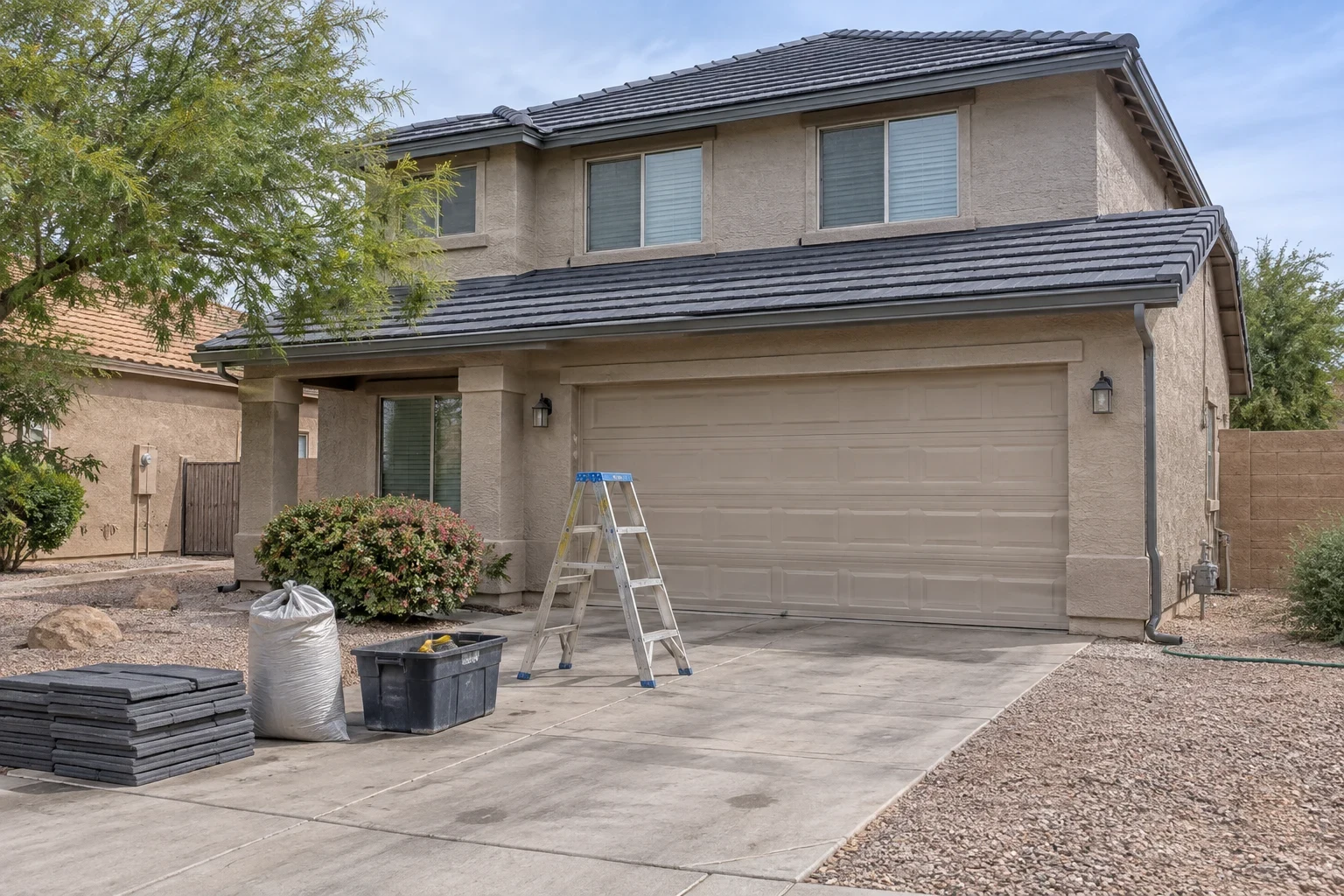
Describe the roof over your home and anything that has caught your eye, from a slipped tile to a stain on a ceiling. We arrange a visit to measure, then put the estimate in writing so each line is clear before you decide.